Rebecca Viereckl-Grush, M.S., CTP, LMFT
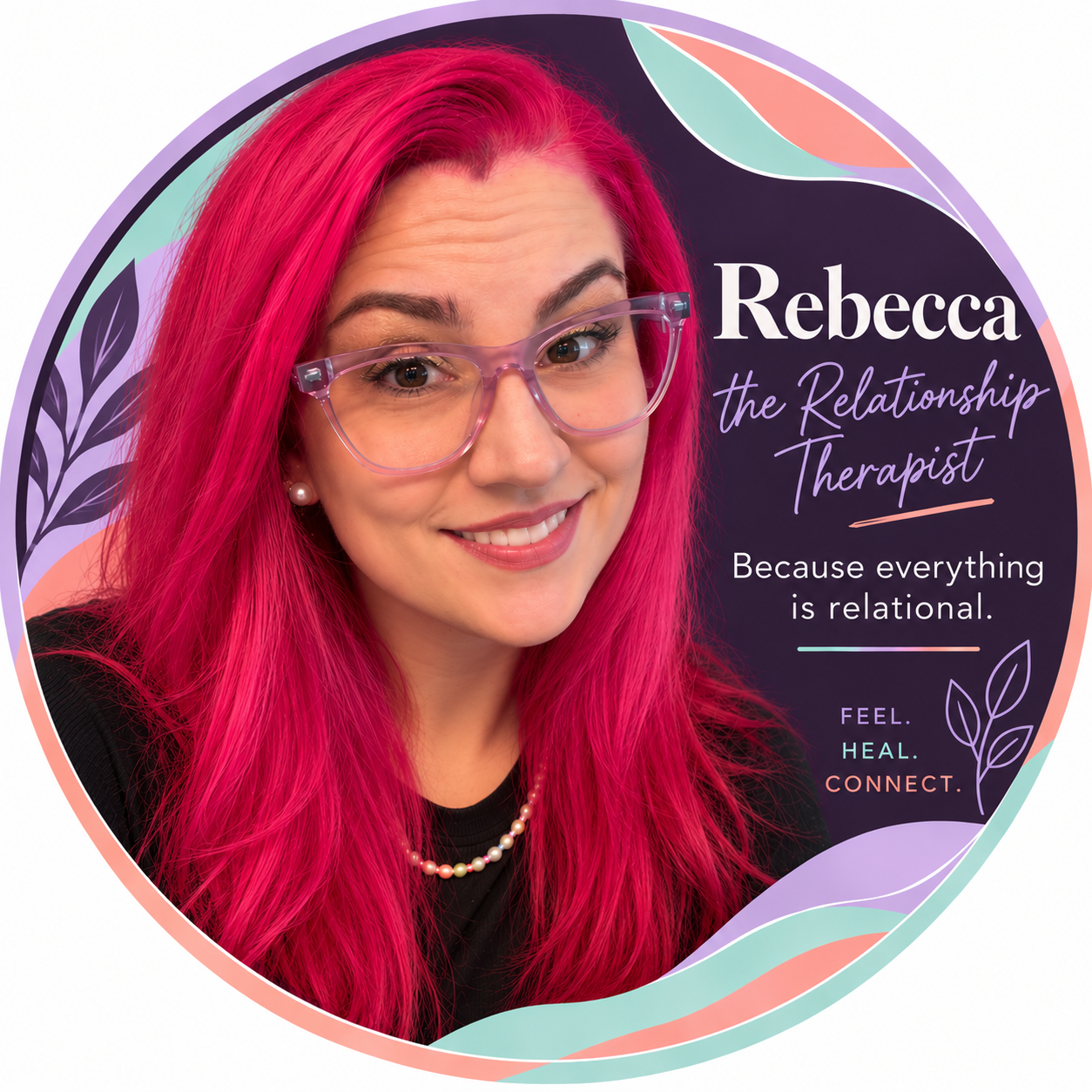
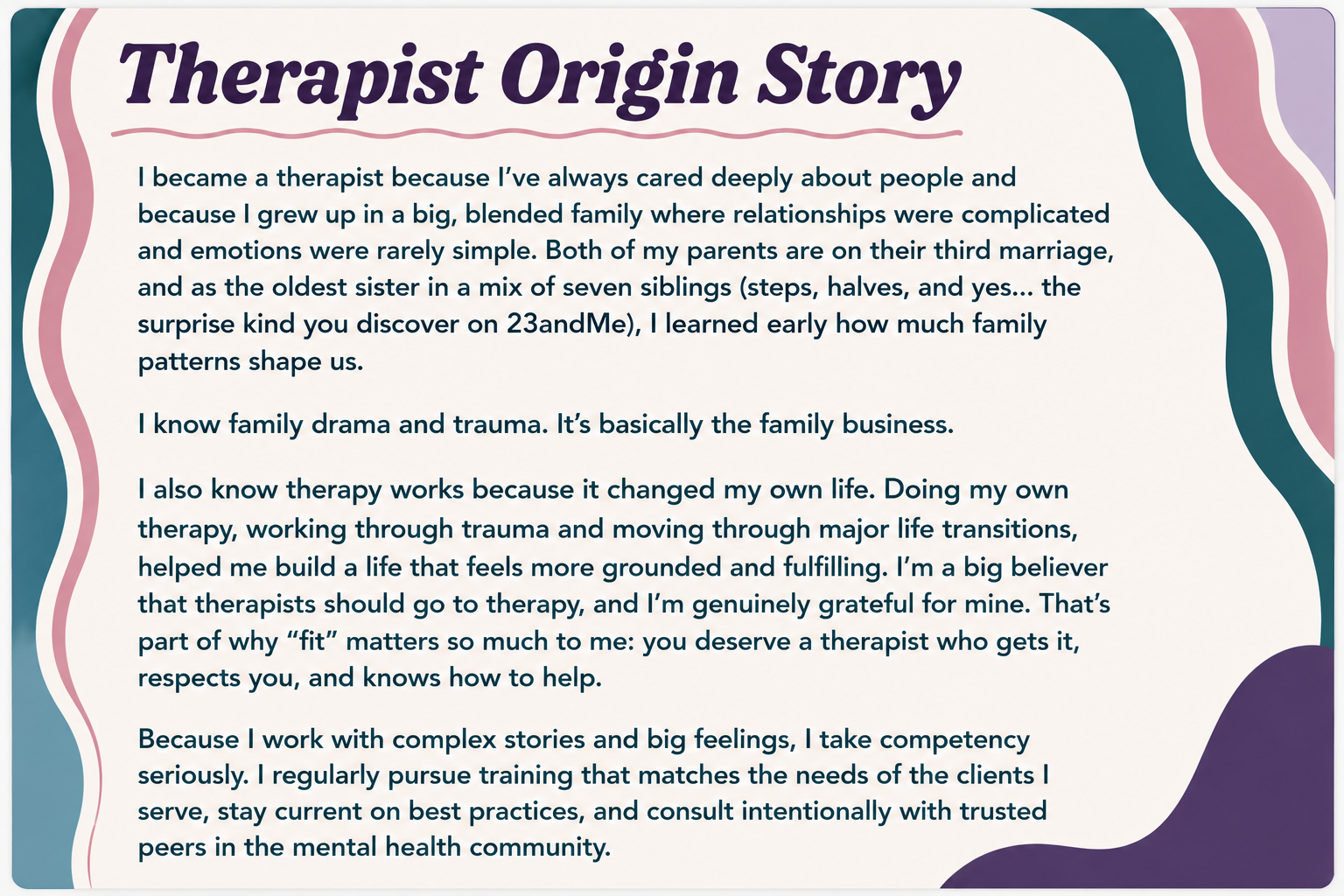
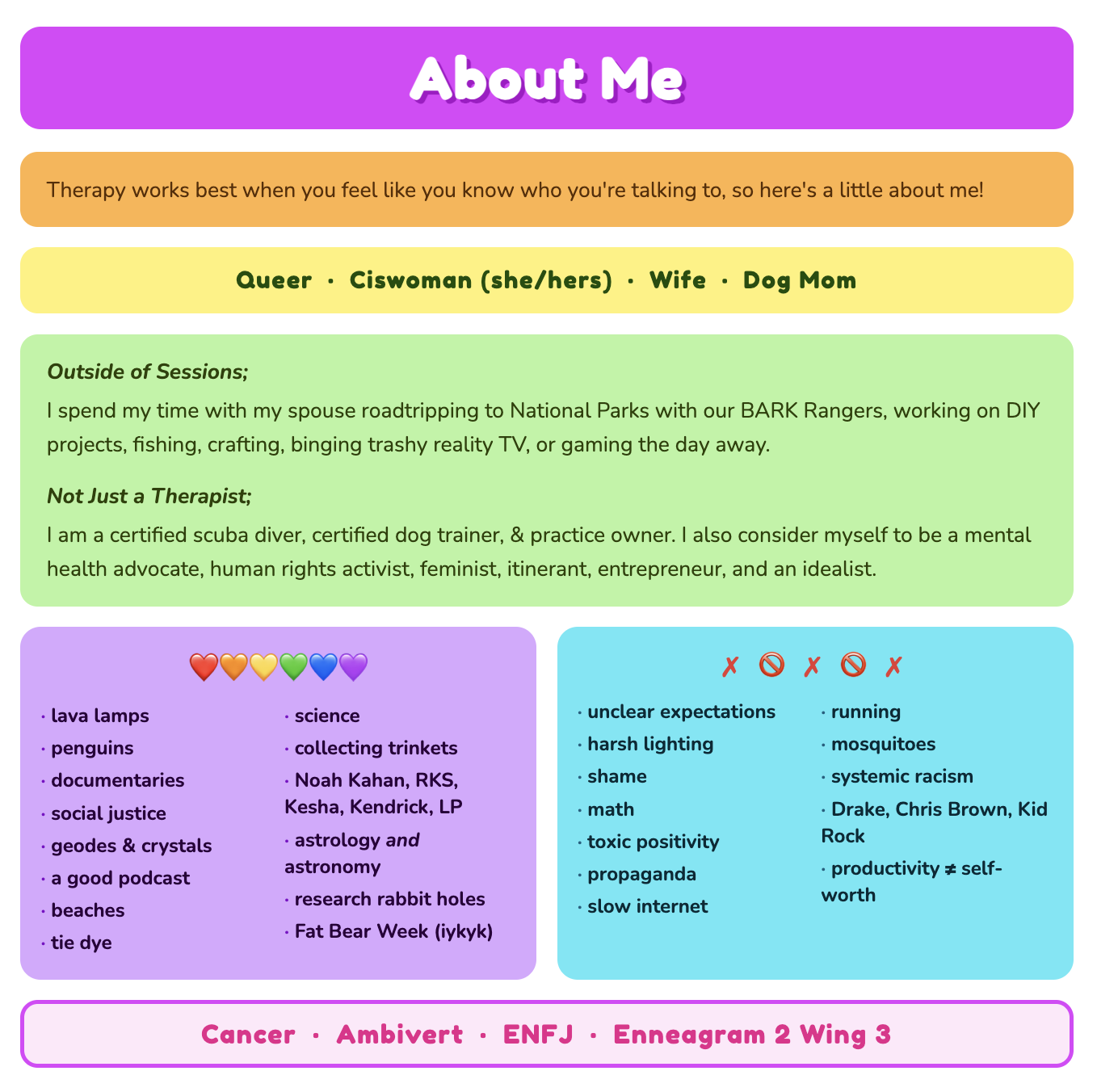
Hi, I’m Rebecca; an insight-driven relational therapist who believes healing starts when you feel safe, seen, & truly understood.
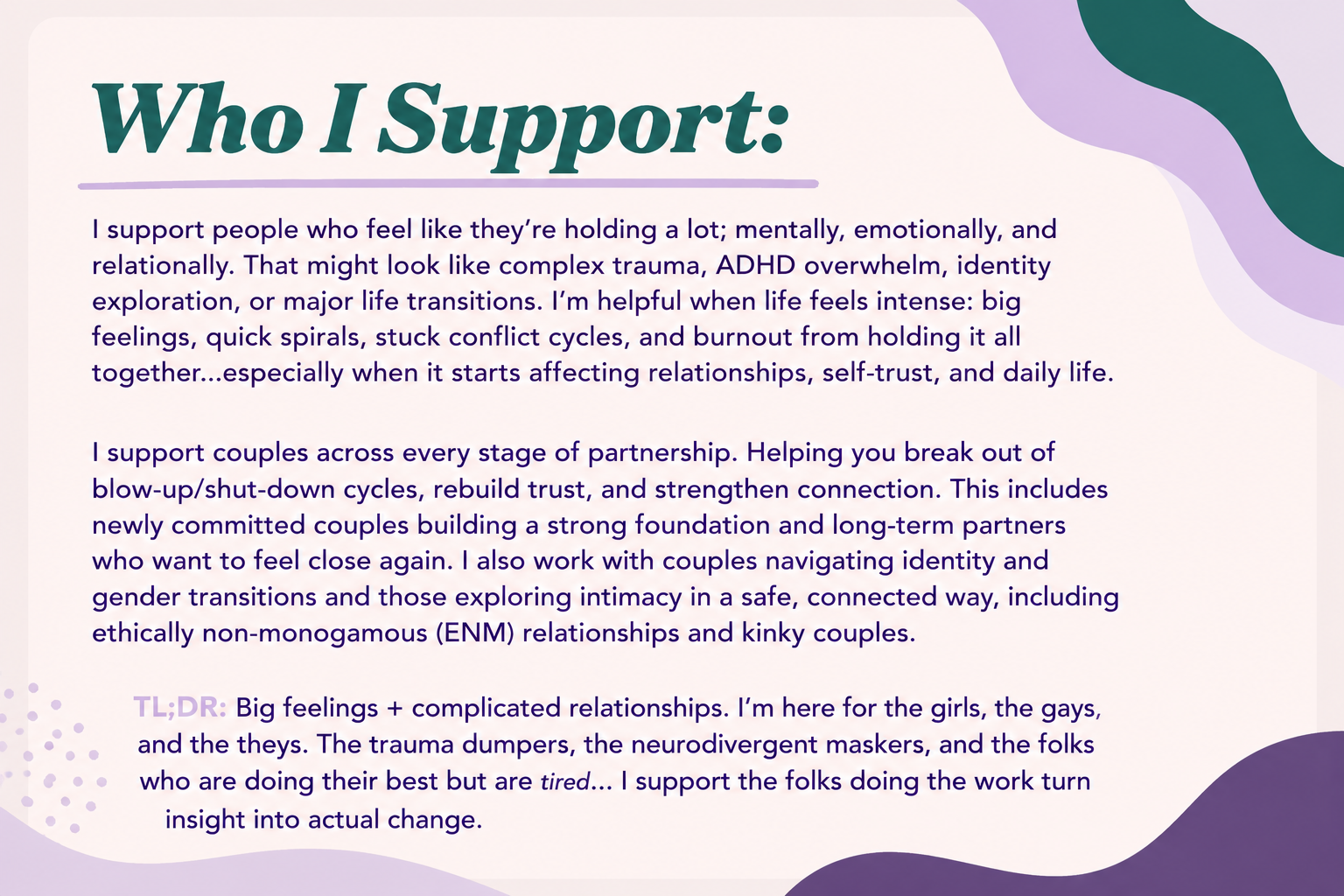
My therapy room is for people who’ve been the “strong one” for too long: women, LGBTQIA+ folks, the neurodivergent, and those navigating mood disorders, personality disorders, or complex trauma.
If you’re exhausted from holding it all together, you’re in the right place.
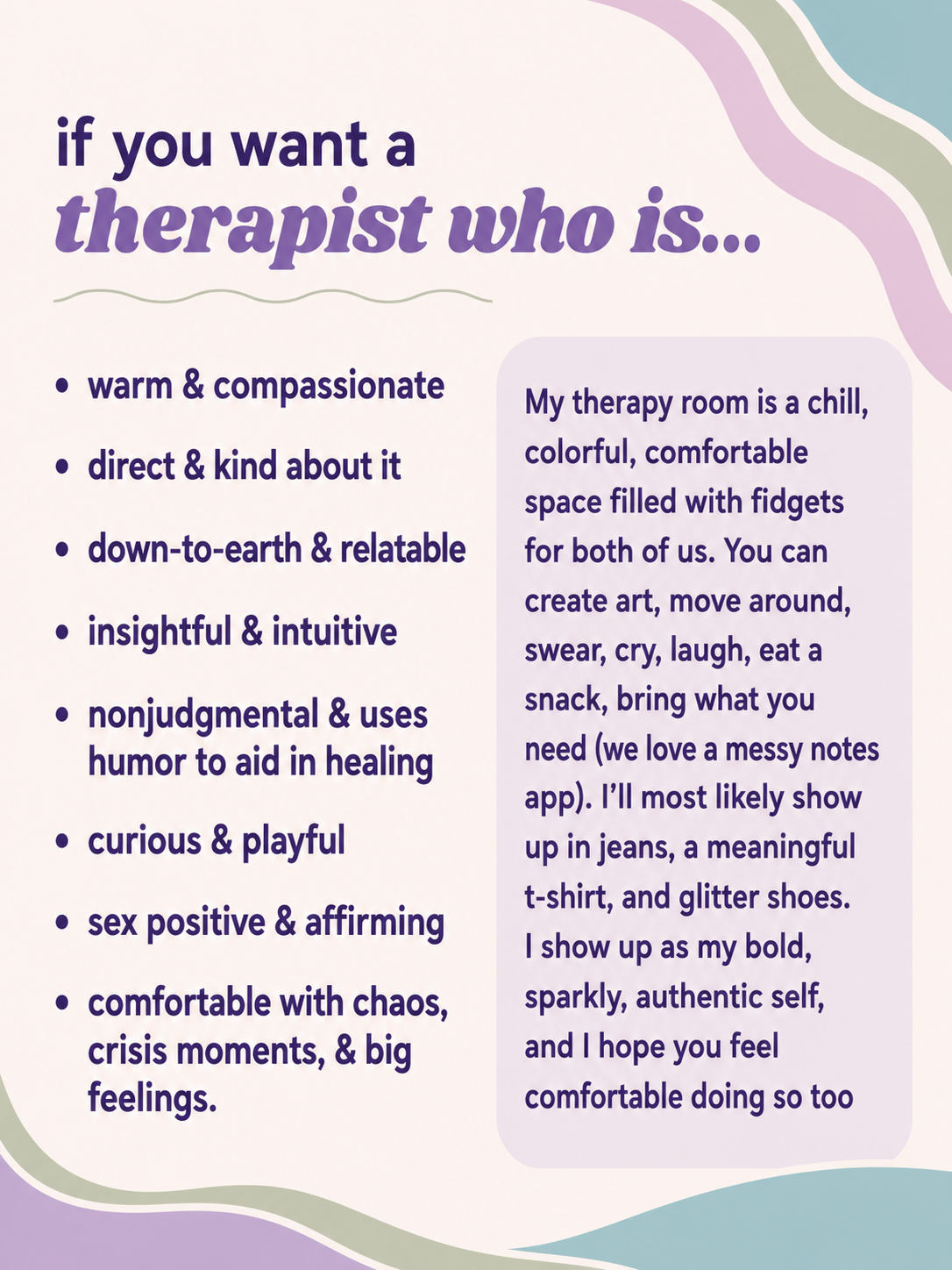
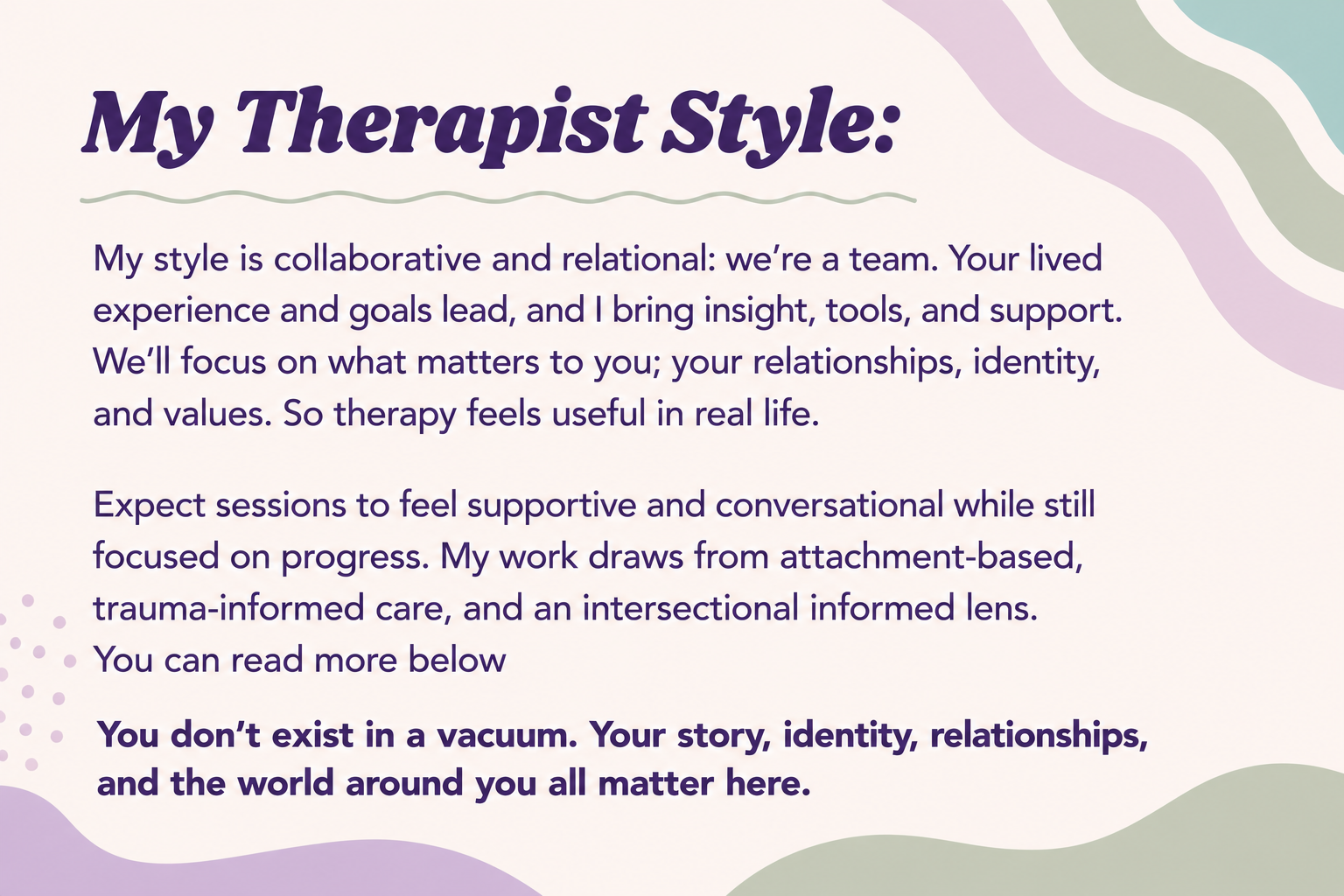
I create a warm, affirming space where together we can untangle what’s weighing on you, find direct and meaningful ways forward, and strengthen your relationship with yourself and others.
The spiral stops here.

Certifications:
-
A licensed mental health professional trained to support individuals, couples, and families through relational, emotional, and life challenges. I am currently only licensed in Illinois.
-
Specialized training in understanding how trauma impacts the brain, body, relationships, and daily functioning. This certification supports a trauma-informed approach that prioritizes safety, empowerment, and healing.
-
Advanced training in the Gottman Method, a research-based approach to couples therapy focused on communication, conflict management, trust, and connection. This framework helps couples build stronger, healthier relationships.
-
Trained to use the PREPARE/ENRICH assessment to help couples strengthen communication, identify growth areas, and build a solid foundation for marriage or long-term partnership. Often used in premarital counseling, but helpful for couples in many stages.
-
Specialized training in recognizing the dynamics and impact of domestic violence, including power, control, safety concerns, and trauma responses. This training supports sensitive, informed care for survivors.
-
Training focused on the emotional, relational, and psychological effects of sexual violence. This helps ensure care is grounded in safety, consent, validation, and survivor-centered support.
-
A credential recognizing specialized knowledge in family systems, human development, relationships, and life transitions. This background supports practical, relationally informed care across individuals, couples, and families.

Therapy Approaches:
Individuals;
-
This approach explores how early relationships and connection patterns shape the way you relate to yourself and others today. It can help strengthen emotional security, self-understanding, and healthier relationships.
-
CBT helps identify unhelpful thought patterns and behaviors that may be contributing to stress, anxiety, depression, or self-doubt. Together, we work to build more balanced thinking and practical coping tools.
-
Feminist therapy considers how identity, relationships, culture, power, and systemic experiences affect mental health. It centers empowerment, collaboration, and helping clients reconnect with their voice and values.
-
Narrative therapy helps you separate yourself from the problem and examine the stories you have been told or have come to believe about yourself. This process creates space for healing, clarity, and a more empowered story moving forward
-
Somatic therapy brings attention to the connection between the mind and body, helping clients notice how stress, trauma, and emotions can show up physically. This approach supports healing by increasing body awareness, nervous system regulation, and a greater sense of safety within yourself.
-
Trauma-informed therapy recognizes the widespread impact trauma can have on emotions, relationships, and the nervous system. It emphasizes safety, choice, trust, and working at a pace that feels supportive and respectful.
Couples & Families:
-
EFT is a structured, evidence-based approach that helps couples understand the deeper emotions and attachment needs underneath conflict. It supports partners in rebuilding trust, connection, and emotional closeness.
-
The Gottman Method helps couples improve communication, manage conflict more effectively, and strengthen friendship, trust, and intimacy. It is a practical, research-based approach designed to help relationships feel more stable and connected.
-
Family Systems Therapy looks at how each person’s role, patterns, and relationships within the family affect the whole system. This approach helps families better understand one another, reduce conflict, and create healthier ways of relating.
-
Structural Family Therapy focuses on the patterns, boundaries, and roles within a family system. It helps families create healthier structure, improve communication, and shift dynamics that may be contributing to stress or conflict.
-
PCIT is an evidence-based approach that helps strengthen the parent-child relationship while improving behavior, communication, and emotional regulation. It gives caregivers practical tools to build connection, consistency, and confidence.

We actually learned communication skills.
Client Reviews;
I felt genuinely cared for.
“Rebecca was truly incredible to work with. I was honestly so disappointed when my insurance changed because she’s one of the best therapists I’ve ever had. She has this rare balance of being warm, funny, and relatable while still maintaining a high level of professionalism. She’s knowledgeable, insightful, and very organized, which made sessions feel both meaningful and productive.
Even when we were working through heavier topics, she had a way of keeping things uplifting and grounded. She always seemed to know exactly what to say to help me process what I was going through, make connections, and move forward in a way that felt clear and manageable.”.
— Previous Client
I feel more confident.
"Rebecca was deeply attentive to both our relationship and the challenges we were navigating. She approached each session with care, really taking the time to understand both of our perspectives and personalities. Even in tougher moments, she stayed supportive and encouraging, helping us strengthen our communication in ways that actually felt doable outside of sessions. I always felt like she genuinely cared, not just about our progress as a couple, but about me as a person too”
— Previous Client
““Because of our work together, I’ve grown in ways I didn’t think were possible. I communicate more openly, understand myself on a deeper level, and feel more confident in the life I’m building. I actually look forward to sessions, which says a lot.’
— Previous Client